
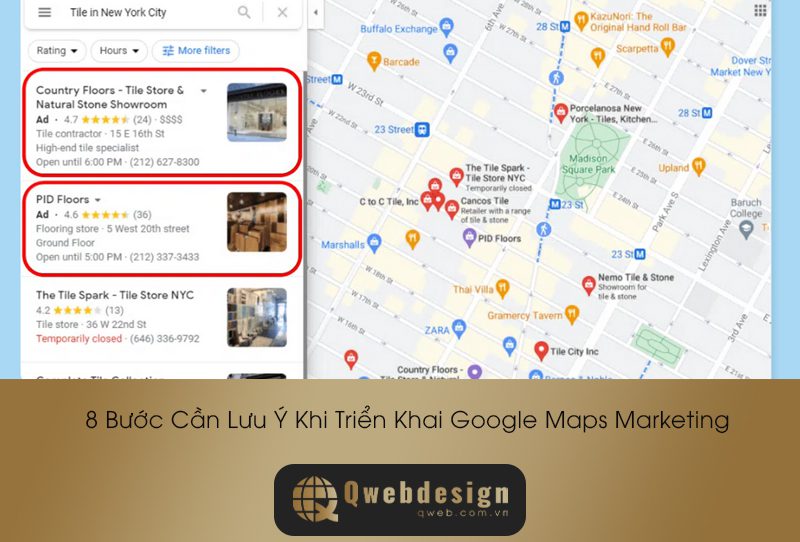
Nowadays, when there is a need to buy a product or use a service, customers often tend to search for locations near them on Google. Queries like “coffee shops near me,” “air conditioning repair service near me,” “good restaurants in Da Nang,” or “photo studios near here” can all take customers directly to Google Maps. This is an opportunity for businesses to reach a group of customers with actual needs through Google Maps Marketing.
So what is Google Maps Marketing? How to optimize Google Maps and attract more local customers? Let's learn through the 8 steps below.
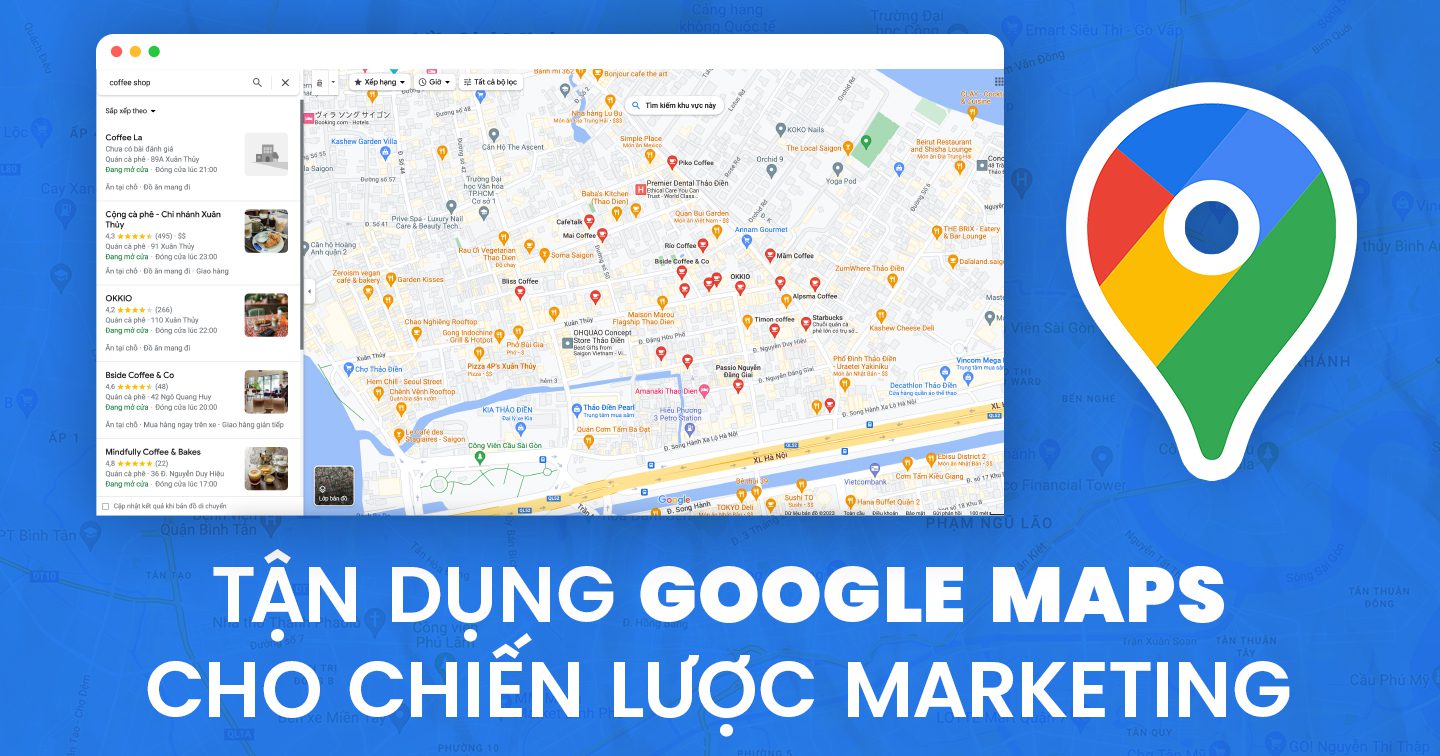
What is Google Maps Marketing?
Google Maps Marketing is the activity of optimizing a business's presence on Google Maps to increase the likelihood of appearing when customers search for products, services or related locations in a specific area.
Passed Google Business Profile, businesses can provide customers with important information such as:
- Business name.
- Address.
- Phone number.
- Operating hours.
- Website.
- List of products and services.
- Images and videos.
- Reviews from customers.
- Location on Google Maps.
When well optimized, business profiles can appear in local search results and Google Maps, thereby creating more opportunities for customers to call, visit the website, find directions or go directly to the store.
Why should businesses deploy Google Maps Marketing?
1. Reach customers in need
One of the notable points of local search is that users often have relatively clear needs. For example, a person searches “near spa” or “auto repair shop near me” is not just looking for general information. They may need to use services right in the area where they live or work.
Therefore, appearing at the right time when customers are searching can help businesses create more conversion opportunities.
2. Increase the likelihood of being known by local customers
If your business operates in a specific area, appearing on Google Maps helps your brand reach people searching for products or services in that area. Especially for industries such as restaurants, hotels, spas, clinics, retail stores, salons, training centers…, location factors can significantly influence customers' decisions.
3. Create more touch points that lead to conversions
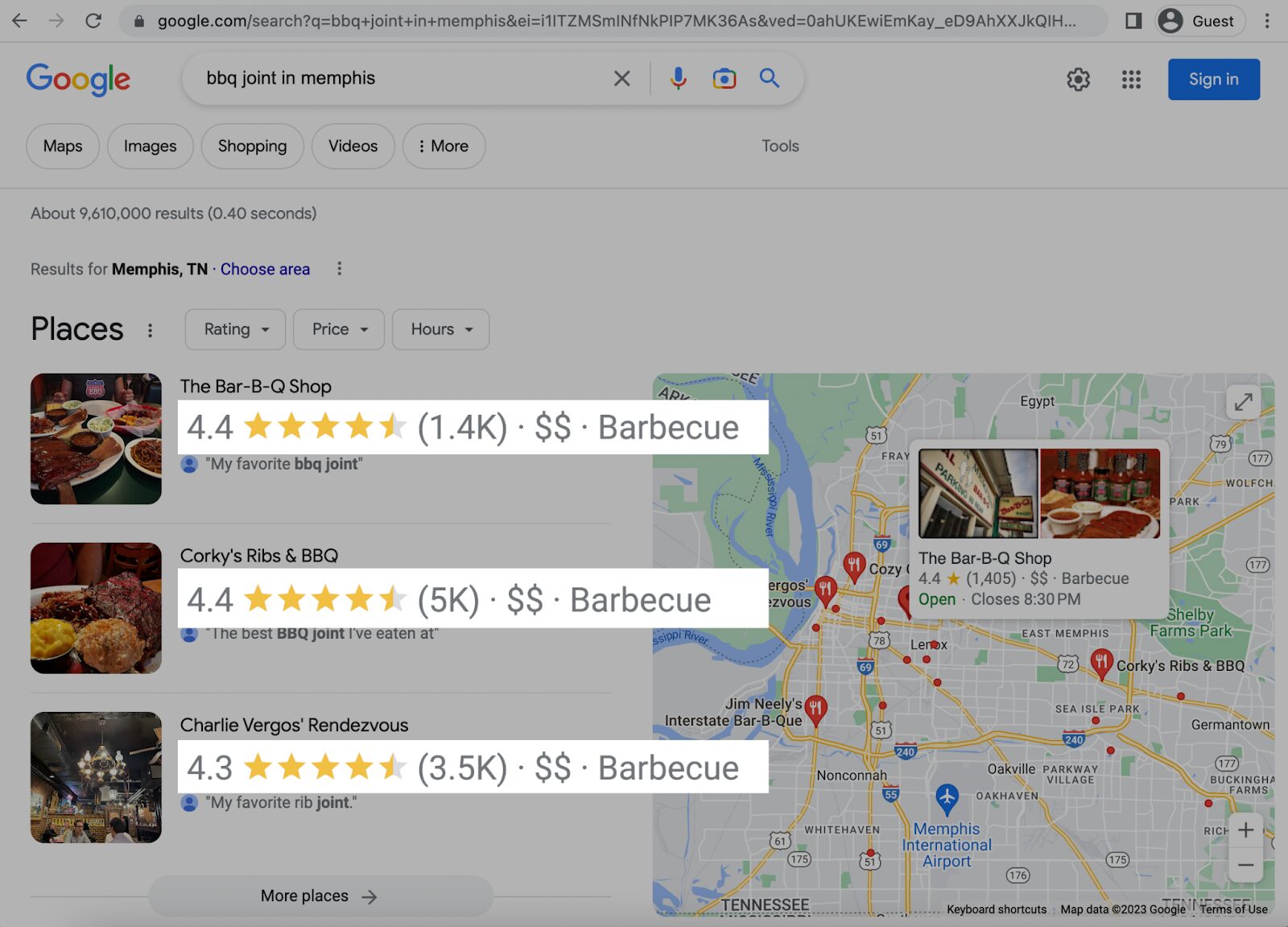
From a Google Business Profile, customers can perform a variety of actions such as:
Learn → see reviews → see pictures → call → visit website → directions → go to the store.
Therefore, Google Maps is not simply a navigation tool but can also become a touch point in the customer journey.
8 steps to effectively implement Google Maps Marketing
Step 1: Create and complete your Google Business Profile
Google Business Profile is an important platform when businesses want to appear on Google Search and Google Maps. Enterprises should provide complete and accurate basic information such as:
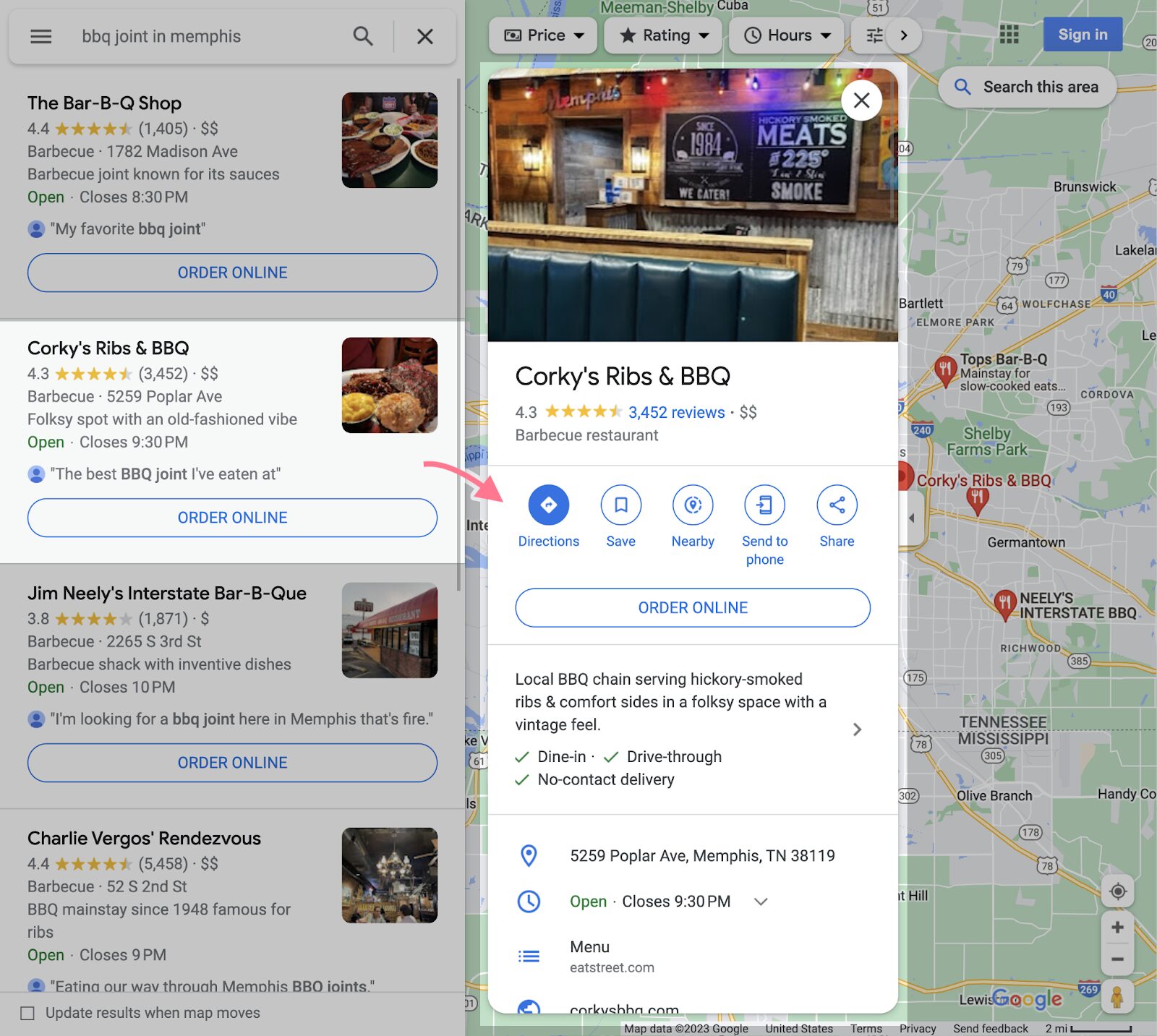
- Business name.
- Address.
- Phone number.
- Website.
- Opening hours.
- Business categories.
- Service area.
- Corporate image.
The more complete and consistent the information, the easier it is for customers to learn about the business before making a decision.
Step 2: Choose a suitable business category
Business categories help Google understand what products or services a business is offering. Therefore, businesses need to choose most relevant main categories with business activities and add related categories if necessary.
For example, a business providing beauty services needs to choose a category that accurately reflects the services it provides instead of choosing a category that is too broad.
Step 3: Update images and content regularly
A Google Maps profile with only basic information but lacking images can be difficult to impress customers. Businesses should regularly update:
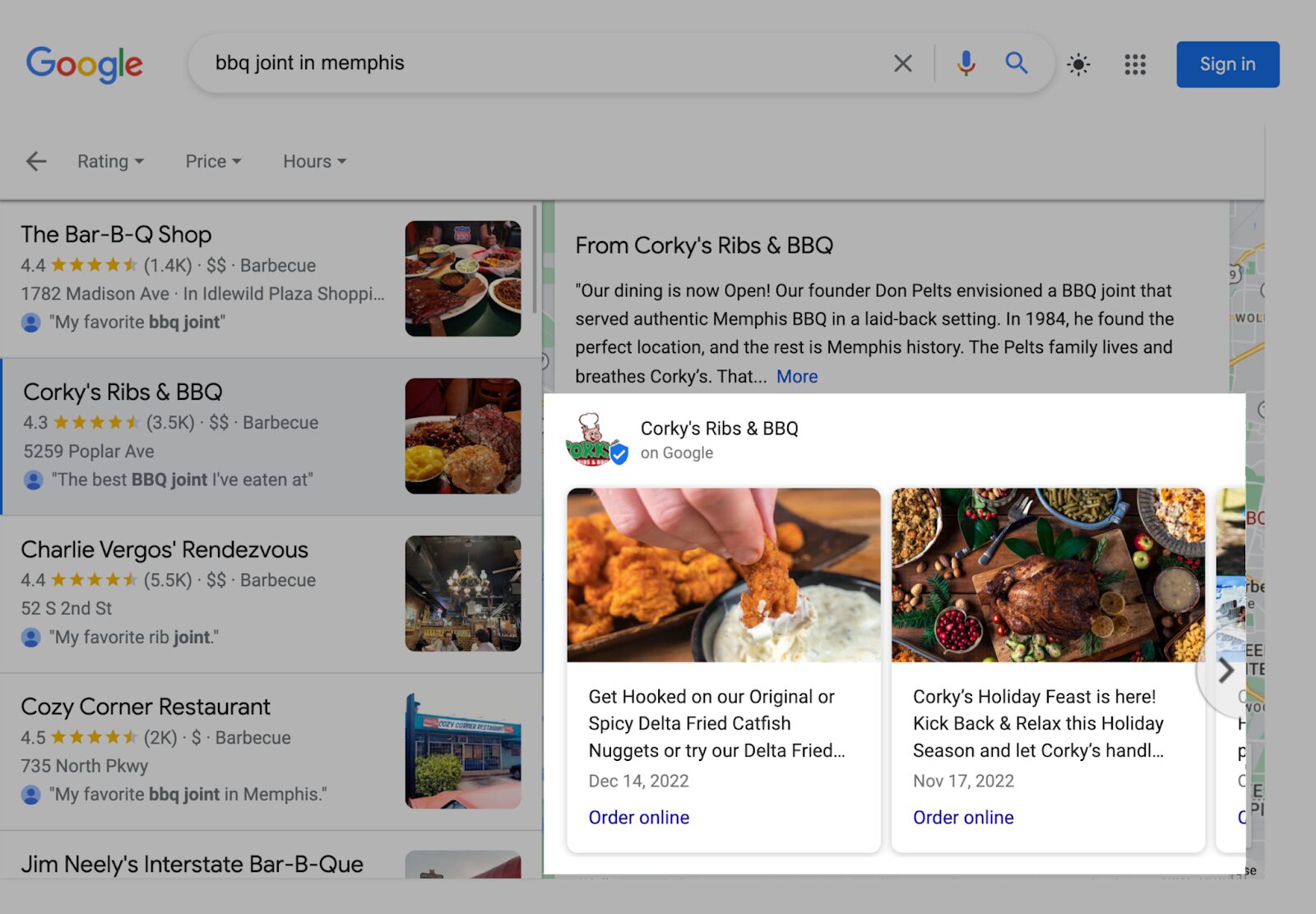
- Space images.
- Product images.
- Team image.
- Images of actual operations.
- Introduction video.
- Promotional program.
- New product or service.
Actual images help customers better visualize the business before deciding to visit or contact.
Step 4: Build and manage customer reviews
Reviews on Google are one of the factors customers care about when choosing a local business. A listing with many positive reviews and specific review content can provide more information to considering customers.
Businesses can proactively encourage customers who have used the product or service to leave reviews based on real-life experiences. In particular, businesses should responded to both positive and negative reviews professionally. Instead of just focusing on the number of reviews, focus on building a real experience that is good enough for customers to be willing to share.
Step 5: Synchronize business information across platforms
Business information should be unified on the website, Google Business Profile, social networks and other online platforms. Three pieces of information often mentioned in Local SEO are:
Name – Address – Phone Number (NAP)
Businesses should limit the situation where names, addresses or phone numbers appear inconsistently across platforms. This consistency helps customers easily verify information and helps search systems better understand the business.
Step 6: Optimize website for Local SEO
Google Maps Marketing should not be implemented completely separate from the website. Businesses can combine Google Maps with Local SEO by building a website with:
- Clear business information.
- Address and contact information.
- Specific service/product page.
- Content related to service area.
- Google Maps are embedded on the website when appropriate.
- Mobile-friendly website.
For example, instead of just writing "air conditioner repair service", businesses can build more specific content such as "air conditioner repair service in Da Nang" if they actually provide services in this area.
Step 7: Effectively monitor Google Maps
Optimizing Google Maps should not be done based on emotion. Businesses need to track relevant metrics to understand how customers are searching and interacting with business profiles.
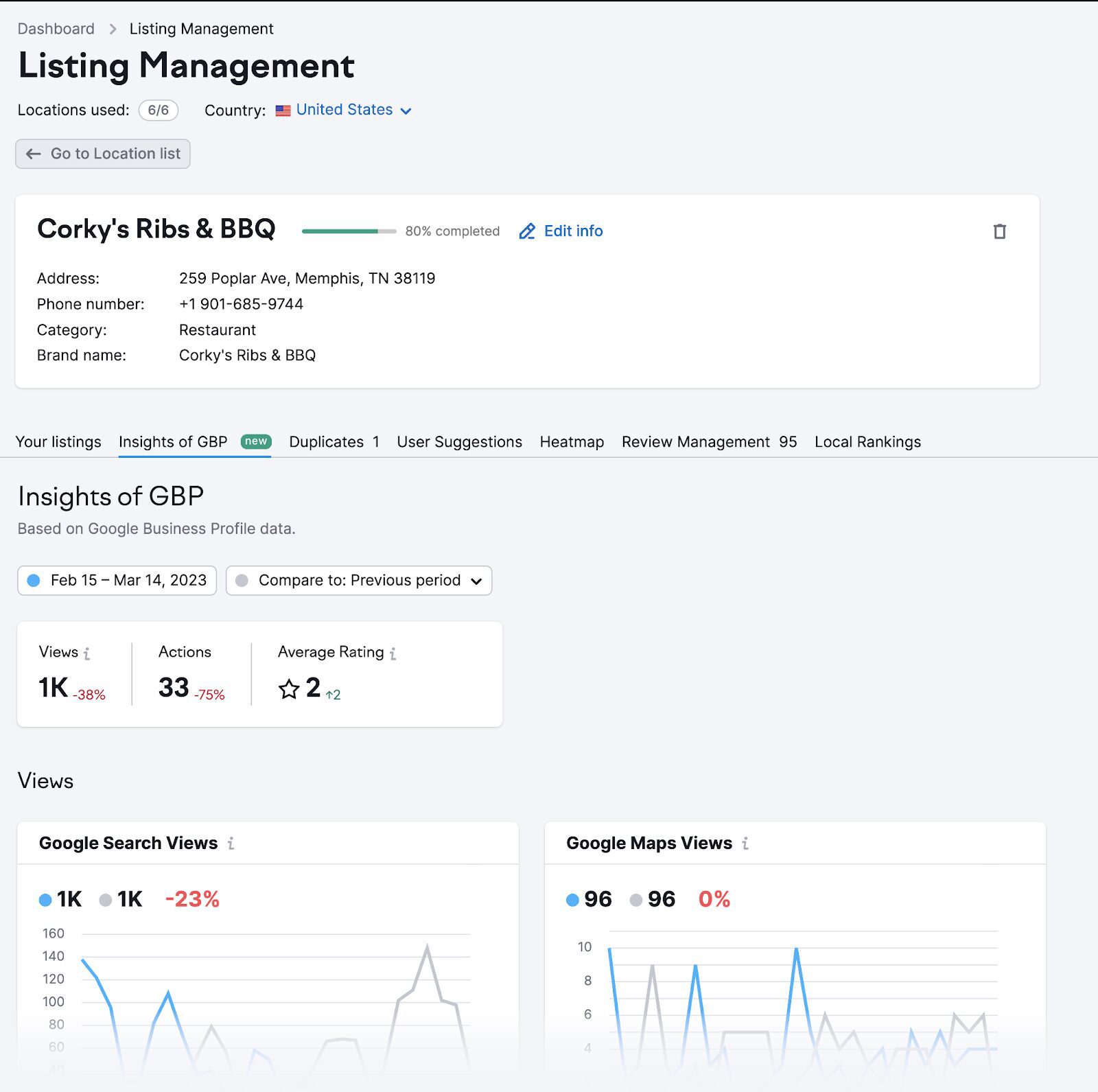
Some notable actions include:
- Business profile views.
- Calls.
- Number of requests for directions.
- Website visits.
- Image views.
- Search queries bring customers to the business.
This data can help businesses identify what is working well and what areas need further optimization.
Step 8: Combine Google Ads when you need to increase reach
Local SEO takes time to build and optimize. Meanwhile, Google Ads can be used as a complementary option to increase customer reach during specific times or areas. Businesses can consider combining:
Google Maps Marketing + Local SEO + Google Ads + Website
instead of depending entirely on a single channel.
Which businesses is Google Maps Marketing suitable for?
Google Maps Marketing is especially suitable for businesses that have business locations or serve customers in specific areas, for example:
- Restaurants, cafes.
- Hotels, homestays.
- Spa, salon, clinic.
- Retail stores.
- Training center.
- Gym.
- Studio.
- Repair service.
- Businesses providing local services.
However, the level of suitability also depends on the business model, service area and search behavior of target customers.
Common mistakes when doing Google Maps Marketing
Just create a profile and leave it there
Creating a Google Business Profile is just the first step. If information is not updated, images are few, do not respond to reviews and do not track data, businesses will miss many optimization opportunities.
Business information is inconsistent
Different addresses, phone numbers or business names between platforms can make it difficult for customers to verify information.
Unnatural review
Businesses should not chase the number of reviews with fake or dishonest reviews. Focus on creating a good experience and encouraging real customers to share their experiences.
Skip the website
Google Maps and websites can support each other. A good Maps profile combined with a Local SEO optimized website will create a more complete information ecosystem for customers.
What's the difference between Google Maps Marketing and Local SEO?
Google Maps Marketing and Local SEO have a close relationship but are not exactly the same. Google Maps Marketing focuses more on optimizing your business's presence on Google Maps and Google Business Profile. Meanwhile, Local SEO has a broader scope, including optimizing websites, content, business information, local signals and many other factors to increase the likelihood of appearing in searches with local elements.
Can be understood simply:
Google Maps Marketing is an important part of the overall Local SEO strategy.
For businesses that have business locations or serve customers in a specific area, Google Maps Marketing can become an important touchpoint to increase the likelihood of being found by local customers.
From completing Google Business Profile, updating images, managing reviews, synchronizing information to combining Local SEO and Google Ads, businesses need to build an overall strategy instead of simply "putting your business on Google Maps".
FAQ – Frequently asked questions about Google Maps Marketing
Is Google Maps Marketing free?
Creating and managing a basic Google Business Profile does not require businesses to pay a fee. However, businesses may incur costs if they use advertising activities or hire a unit to deploy in-depth optimization services.
How long does it take for Google Maps to be effective?
There is no fixed time period for all businesses. Effectiveness depends on the level of competition in the region, industry, application status, reputation of the business and many other factors.
Do I need a website when doing Google Maps Marketing?
Not required in all cases, but a website can assist businesses in providing additional information and combine with Local SEO to build a more comprehensive online presence.
Are Google reviews important?
Reviews provide reference information for customers and are a notable part of a business profile. Businesses should focus on collecting reviews from real customers and responding to reviews professionally.