
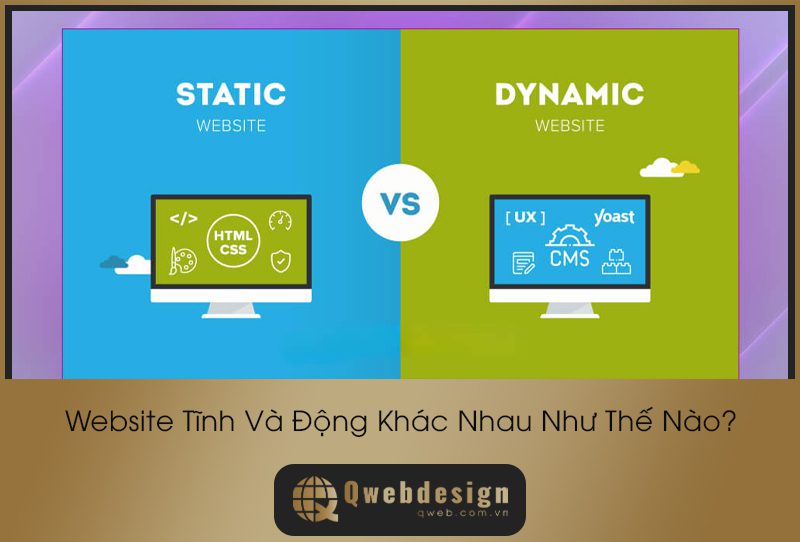
When starting to build a website, one of the common questions is: Should I do it? static website or dynamic website? These two types of websites have clear differences in how they operate, the ability to update content, cost and suitability for each business need.
If you are wondering between a static website and a dynamic website, the article below will help you understand the characteristics of each type and choose the appropriate solution.
What is a static website?
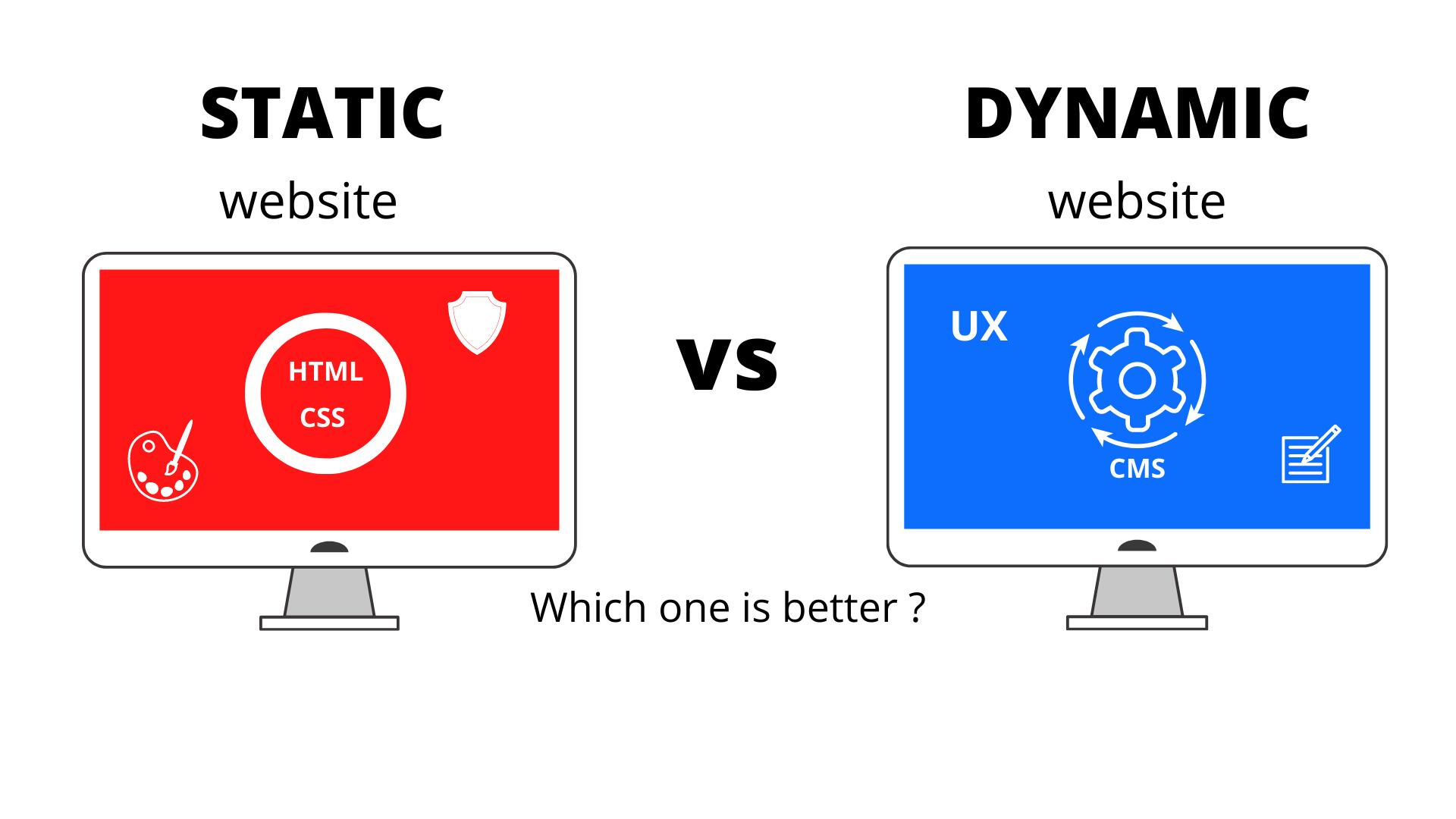
static website is a type of website whose content is built directly into HTML, CSS and JavaScript files. Content on the page is usually displayed fixedly and does not change according to data from the database.
When wanting to edit content, images or interfaces, administrators often need to intervene directly in the source code or use separately integrated management tools.

Characteristics of static websites
- Content is relatively fixed.
- No or little use of databases.
- Fast page loading speed.
- Simple structure, easy to deploy.
- Construction costs are often lower than dynamic websites.
- Suitable for introductory websites, landing pages or projects with little content that needs updating.
Advantages of static website
Fast loading speed: Because there is no need to process much data from servers and databases, static websites can have good page loading speeds.
Low investment costs: With a simple structure, static websites usually do not require too many resources to build and operate.
Relatively good security: Because there are few dynamic components and little interaction with databases, static websites can reduce some common security risks.
Suitable for simple websites: If your business only needs a website to introduce information, products, services and contact information, a static website may be the right choice.
Limitations of static websites
The biggest disadvantage of a static website is limited ability to manage and update content.
When your website has hundreds of products, articles, or multiple categories, editing each individual page can take a lot of time. Static websites are also not suitable for systems that require logins, shopping carts, online payments or complex data management.
What is a dynamic website?
Dynamic website is a website capable of creating and displaying content based on data stored in a database. Page content can change dynamically depending on users, operations or updated data.
Dynamic websites are often built with content management systems (CMS) or server-side frameworks and programming languages.
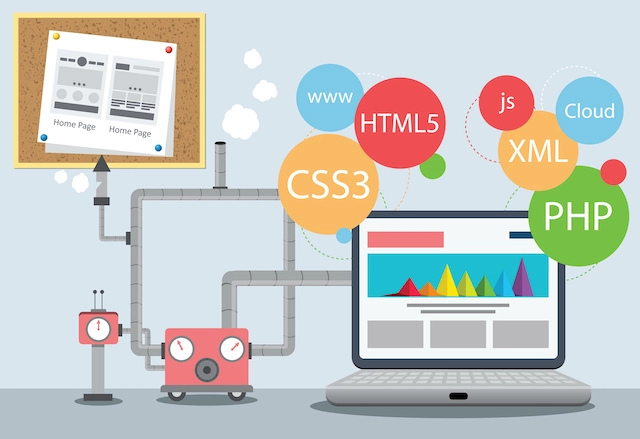
For example, when an administrator posts a new article on the website, the system can automatically update that article to the blog page without having to manually create a new HTML file.
Characteristics of dynamic websites
- Able to connect and use databases.
- Content can be updated regularly.
- Have a website management system.
- Can integrate many features.
- Suitable for business websites, sales, news, e-commerce and online systems.
Advantages of dynamic websites
Easy to manage content: Administrators can post, edit or delete articles, products, images and other information through the administration system.
Highly scalable: Dynamic websites can integrate more features such as search, login, shopping cart, payment, customer management or connection with other platforms.
Suitable for business activities: Businesses can regularly update products, promotions, news and marketing content.
Long-term development support: When business needs change, dynamic websites are often easier to expand and develop additional functions.
Limitations of dynamic websites
Dynamic websites are common higher construction and operating costs static website due to more complex structure.
In addition, the website needs to have its software, plugins or systems updated regularly to ensure performance and security. If the website has too many functions but is not well optimized, page loading speed may also be affected.
Compare static website and dynamic website
| Criteria | static website | Dynamic website |
| Structure | Simple | More complicated |
| Database | Usually not needed | Can be used |
| Content update | More difficult | Easy |
| Speed | Usually very fast | Depends on optimal ability |
| Administration | Limitations | Flexible |
| Scalability | Low – average | Cao |
| Features | Basic | Diversity |
| Cost | Usually lower | Usually higher |
| Suitable | Landing page, simple introduction website | Business, sales, blog, e-commerce |
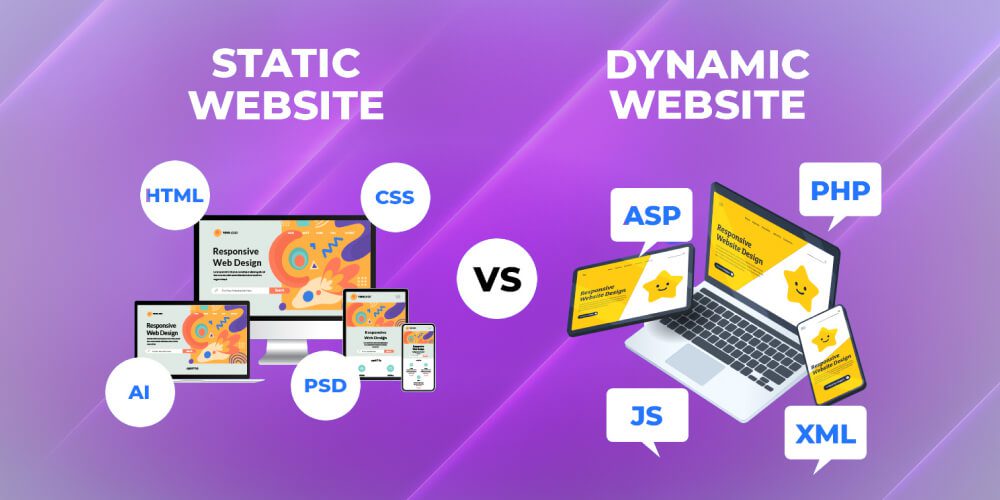
Is a static website or dynamic website better?
There is no absolute answer to the question Is a static website or dynamic website better?. The appropriate choice depends on the business's goals, scale and website usage needs.
You should choose a static website when:
- Just need a simple introductory website.
- Content changes little.
- Need a landing page for a marketing campaign.
- Prioritize download speed and investment costs.
- No need for a complicated administration system.
You should choose a dynamic website when:
- Businesses regularly update content.
- There are many products or services.
- Need to build a blog and develop long-term SEO.
- Want to integrate shopping cart, checkout or customer account.
- Need a content management system.
- There are plans to expand the website in the future.
Is a dynamic website good for SEO?
Yes. Dynamic websites can be completely optimized SEO is good if built with proper techniques.
A dynamic website allows businesses to easily grow content SEO, create more landing pages, blog posts, product categories and update content regularly.

However, just because a dynamic website has many features does not mean that SEO will be better. SEO effectiveness also depends on many factors such as:
- Page loading speed.
- Website structure.
- Ability to crawl and index.
- URL.
- Title tag and meta description.
- Heading.
- Internal link.
- Quality content.
- Mobile-friendly.
- Core Web Vitals.
- Technical SEO.
Therefore, when designing websites, businesses should pay attention SEO right from the construction stage, instead of only optimizing after the website is completed.
Static website and dynamic website: Which is the right choice for businesses?
If your business just needs a simple website to introduce its brand, services and contact information, static website can meet your needs well at a reasonable cost. On the contrary, if website is determined to be a long-term business and marketing channel, a dynamic website is often a more suitable choice. Businesses can proactively manage content, develop SEO, update products and expand additional features when necessary. In particular, for businesses that want to build websites to attract customers from Google, deploy content marketing and increase conversions, the management and expansion capabilities of dynamic websites will bring more advantages.